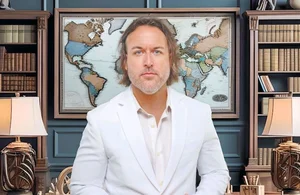
ROI Podcast® Episode 514 | Mark Quann, founder of The Perfect Portfolio and author of Be Smart Pay Zero Taxes
You were probably told to save money, build good credit, contribute to retirement accounts, work for several decades, and eventually retire somewhere with a Costco membership and surprisingly strong opinions about thermostat settings. Mark Quann thinks that playbook deserves cross-examination.
What Buy Borrow Die means
In episode 514, Quann explains the wealth strategy commonly called Buy, Borrow, Die. The basic idea is to acquire appreciating assets, avoid unnecessary sales that may trigger capital-gains taxes, and potentially use loans secured by those assets to access liquidity.
The strategy is associated with wealthy investors because it requires valuable assets, access to favorable lending, disciplined risk management, and the ability to withstand market movement. It is not a shortcut, and it is not a suggestion to borrow casually against a volatile portfolio because a podcast title sounded confident.
Debt behaves differently when it buys time
Quann argues that wealthy investors often view debt as a tool rather than a moral category. A loan can preserve ownership of an appreciating asset and delay a taxable sale, but the math depends on interest rates, collateral requirements, cash flow, and the risk of a margin call.
The conversation covers stocks and ETFs, real estate, life insurance, precious metals, Bitcoin, inflation, capital gains, and conventional retirement advice. Law stress-tests the liquidity strategy with the financial-planning question every serious wealth show avoids: how should somebody finance a cocaine habit? Somebody had to protect the consumer.
Financial education before financial theater
Quann's path into finance included poverty, leaving school, working as a private investigator in Los Angeles, becoming a financial advisor, writing books, and building The Perfect Portfolio. He now teaches investing concepts, including to homeschool students.
He is bullish on Bitcoin while separating it from the rest of crypto. Whether a listener agrees with that conclusion or not, the useful lesson is to understand the asset, the tax treatment, the loan terms, and the downside before adopting a strategy built for somebody else's balance sheet.
Key Takeaways
Buy Borrow Die uses appreciating assets and collateralized borrowing to reduce unnecessary taxable sales.
Interest rates, collateral volatility, cash flow, and margin-call risk can change the strategy quickly.
Debt can be productive or destructive depending on the asset, terms, and risk controls.
Financial strategies should be evaluated against the investor's actual balance sheet and professional advice.
Important Note
This episode and blog post are for education and entertainment. They are not tax, legal, or investment advice. Consult qualified professionals before making financial decisions.
Links and Resources
About ROI Podcast
ROI Podcast® is hosted by Law Smith and Eric Readinger. The show combines practical business conversations with comedy for founders, operators, marketers, and executives who prefer useful ideas without the corporate anesthesia.
ROI Podcast® | ROIShow.com