

Episodes
Featured
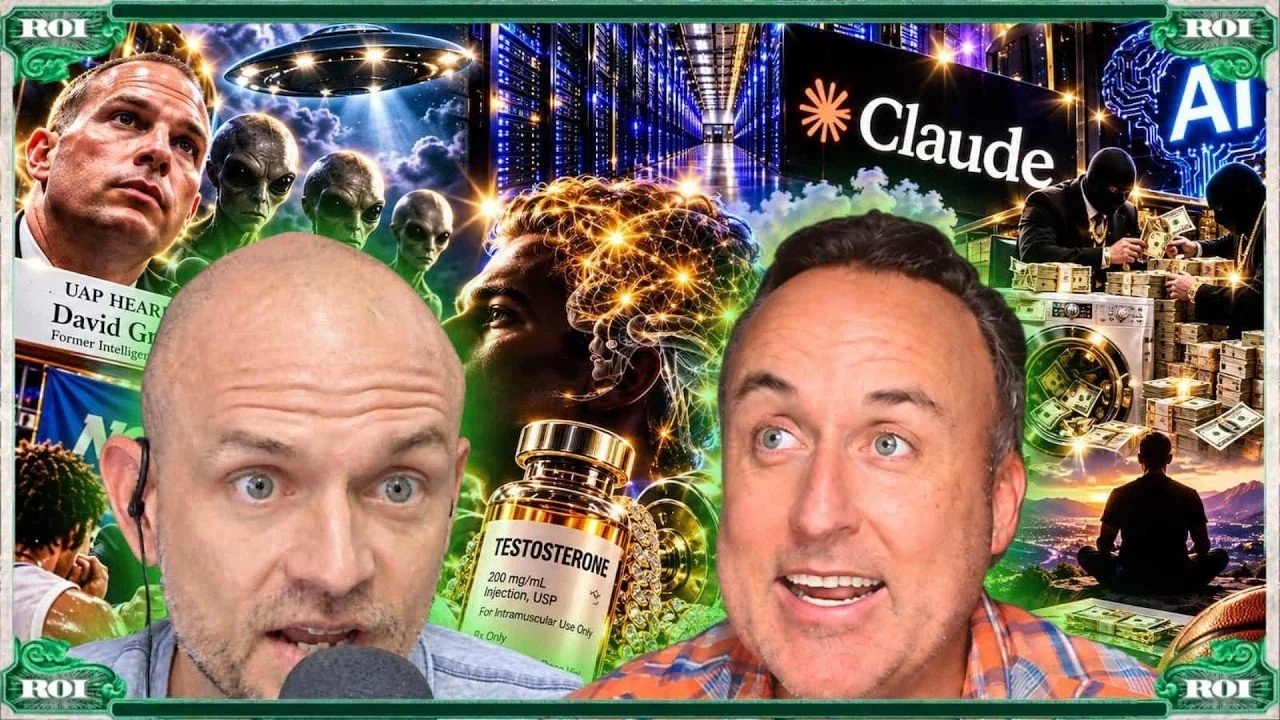




Most management advice quietly assumes the boss makes more than the people being managed. College sports just broke that assumption. In episode 516, Eric Readinger and Law Smith start with John Calipari saying some college basketball players now out-earn assistant coaches, then follow the problem straight into business.
Most people do not hate sales. They hate being sold at by somebody who has been waiting for them to inhale so the 47-slide deck can resume. Cam Tolman built PitchDown around a different idea: stop performing the pitch and guide the buyer toward a clearer decision.
You were probably told to save money, build good credit, contribute to retirement accounts, work for several decades, and eventually retire somewhere with a Costco membership and surprisingly strong opinions about thermostat settings. Mark Quann thinks that playbook deserves cross-examination.
Your website can rank in Google and still be invisible to the increasingly judgmental robot deciding which companies deserve to appear in an AI-generated answer. Episode 512 explains how businesses can improve visibility in Google AI Overviews, ChatGPT, and other LLM-driven research tools without adding 'AI strategy' to a deck and charging themselves another $4,000.
Most companies do not have an idea problem. They have an execution problem wearing a tasteful quarter-zip. Chris Hallberg joins episode 511 to explain how EOS gives leadership teams a shared way to turn vision into traction without converting every meeting into a lawless little hostage situation.
Bryan Clayton started mowing lawns as a teenager, built a landscaping company past $10 million a year, sold it, and then chose the relaxed second act of teaching himself technology and building a nationwide marketplace. GreenPal now connects hundreds of thousands of homeowners with lawn-care professionals, largely because reliability is still a scarce feature.
Running is already punishment with better shoes. Josh Sprague built Orange Mud because the hydration packs he used bounced, chafed, fit badly, and made the activity feel as if a backpack had filed a workplace grievance against his torso.
Small-business ownership is sold like freedom, then quietly turns into a group project where the founder is every group member and the substitute teacher. Andy Clark created The Whole PIE System to help owners build companies that are profitable, impactful, and enjoyable, three goals rarely seen in the same meeting.
Getting rich is not automatically a reward for working harder. Plenty of exhausted people have proved that. Chris Van Dusen, Senior Partner at Solyco Capital, joins episode 507 to explain how capital, risk, ownership, and discomfort actually shape wealth creation.
George Rivera built companies with seven-, eight-, and nine-figure results, including a supplement business that surpassed $200 million in sales. On paper, he had freedom. In practice, he had built a golden cage with better accounting.
Law Smith and Eric Readinger turn episode 505 into a very stupid, very specific, very competitive Scrabble-adjacent bloodsport. Auburn University did not ask for this. Harbert Magazine merely existed near two men with microphones and poor impulse control.
John Krotec has been an Army veteran, retailer, entrepreneur, author, traumatic-brain-injury survivor, expedition leader, and a man willing to discuss DMT and aliens before most people have completed their first polite podcast answer. Episode 503 uses that range to examine masculinity, leadership, truth, and the modern collapse of critical thinking.
Green Goo started the way many durable consumer brands start: somebody needed a better product, the available options were not good enough, and a kitchen slowly lost its right to be called a kitchen. Jodi Scott turned plant-based remedies into a national brand, sold the company, and then did the rare thing. She bought it back.
Kevin Surace has 93 patents, helped pioneer the virtual assistant, invented QuietRock, served as CTO of Appvance, and still came to ROI Podcast to argue that joy matters. This is either wisdom or the most aggressive possible rejection of the tech-founder misery aesthetic.
Episode 500 needed a guest who understood scale, durability, and the danger of turning a novelty product into a novelty company. Kris Dehnert, CEO and owner of Dugout Mugs, brought the operating story behind a physical-product brand that grew into tens of millions of dollars in revenue.
Amazon makes entrepreneurship look beautifully simple: find a product, upload six photos, buy some ads, and wait for a suspiciously young man on YouTube to explain where the Lamborghini money is stored. Hristo Arakliev of Hyperzon brings the less cinematic version, which is also the one that can actually work.
UFO disclosure has spent decades living in the cultural junk drawer between national security, science fiction, government secrecy, and a guy at a cookout who has definitely seen something over MacDill. ROI Podcast episode 498 pulls that drawer all the way out with John J. Murray.
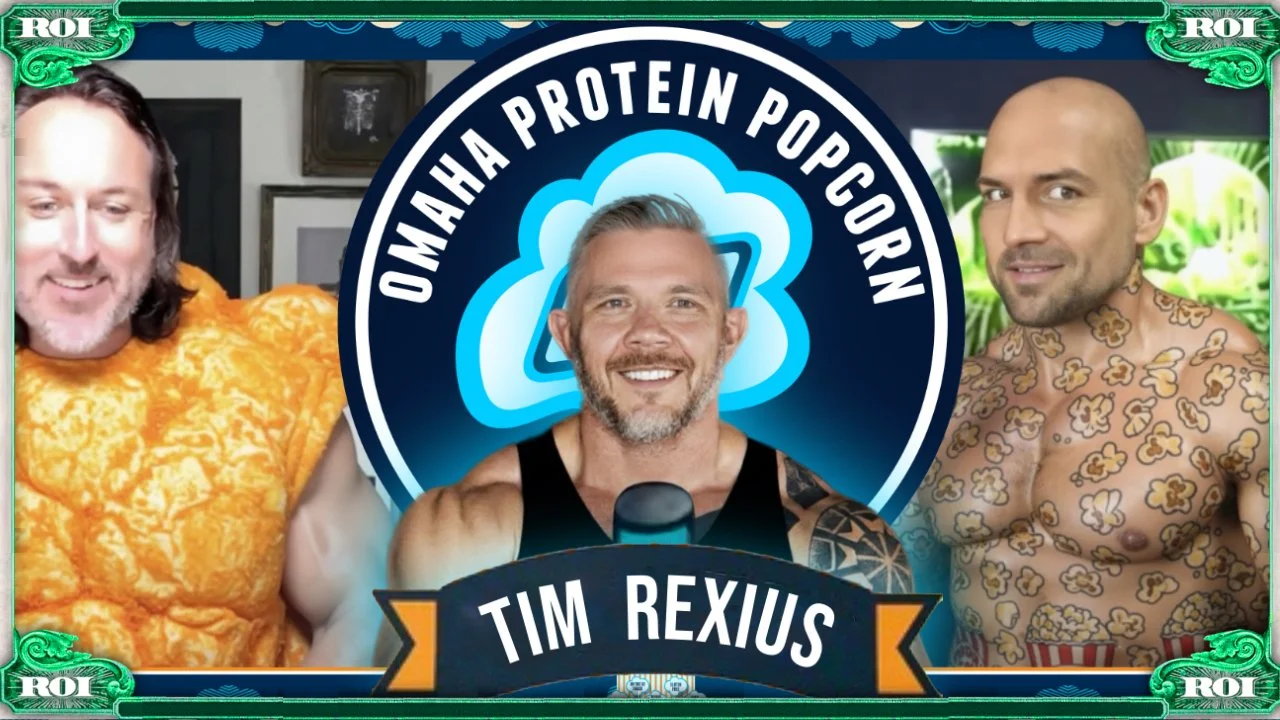
What do you get when a fitness entrepreneur loses $500K, ignores every “expert,” and ends up selling popcorn in 14 countries before running a single ad? You get Tim Rexius, founder of Omaha Protein Popcorn, Rexius Nutrition, and Iron Heaven Gyms — and possibly the hardest-working man in snacks.
Private equity price hikes have a tell: the product you already rely on suddenly costs a lot more, and absolutely nothing about it got better. In episode 517, Eric Readinger and Law Smith start with Law's 15-year Evernote habit and work outward to a much bigger question: who actually owns everything?